आरोग्यगाँवAarogyagaon

Healthcare for rural India · Since September 2019

A village should hear about an outbreak before it arrives.

Aarogyagaon builds low-cost early warning for mosquito-borne disease, and keeps children in school when a health crisis hits their family. The name joins two words: आरोग्य, health, and गाँव, village.

Female · lower pitch Male · higher pitch
Male mosquitoes beat their wings faster than females, so each hums at its own pitch. Our device listens for that difference. This drawing is an illustration and does not show recorded data.

The problem

A mosquito bite costs a family more than a fever.

Diseases carried by mosquitoes and other vectors cause more than 700,000 deaths a year worldwide. Malaria alone accounts for more than 608,000 of them, most of them children under five, according to the World Health Organization.

On our village visits we met families whose children had missed school and workers who had lost income to illnesses that could have been prevented.

Most villages learn of an outbreak from the first cases at the clinic. We wanted the warning to come earlier, from the mosquitoes themselves.

The device

A trap that listens.

The idea began in 2017 with an article about a community in Africa whose members could tell a mosquito's species and sex by eye, and used that knowledge to plan prevention. We set out to give any village the same early read, with a low-cost device doing the identifying.

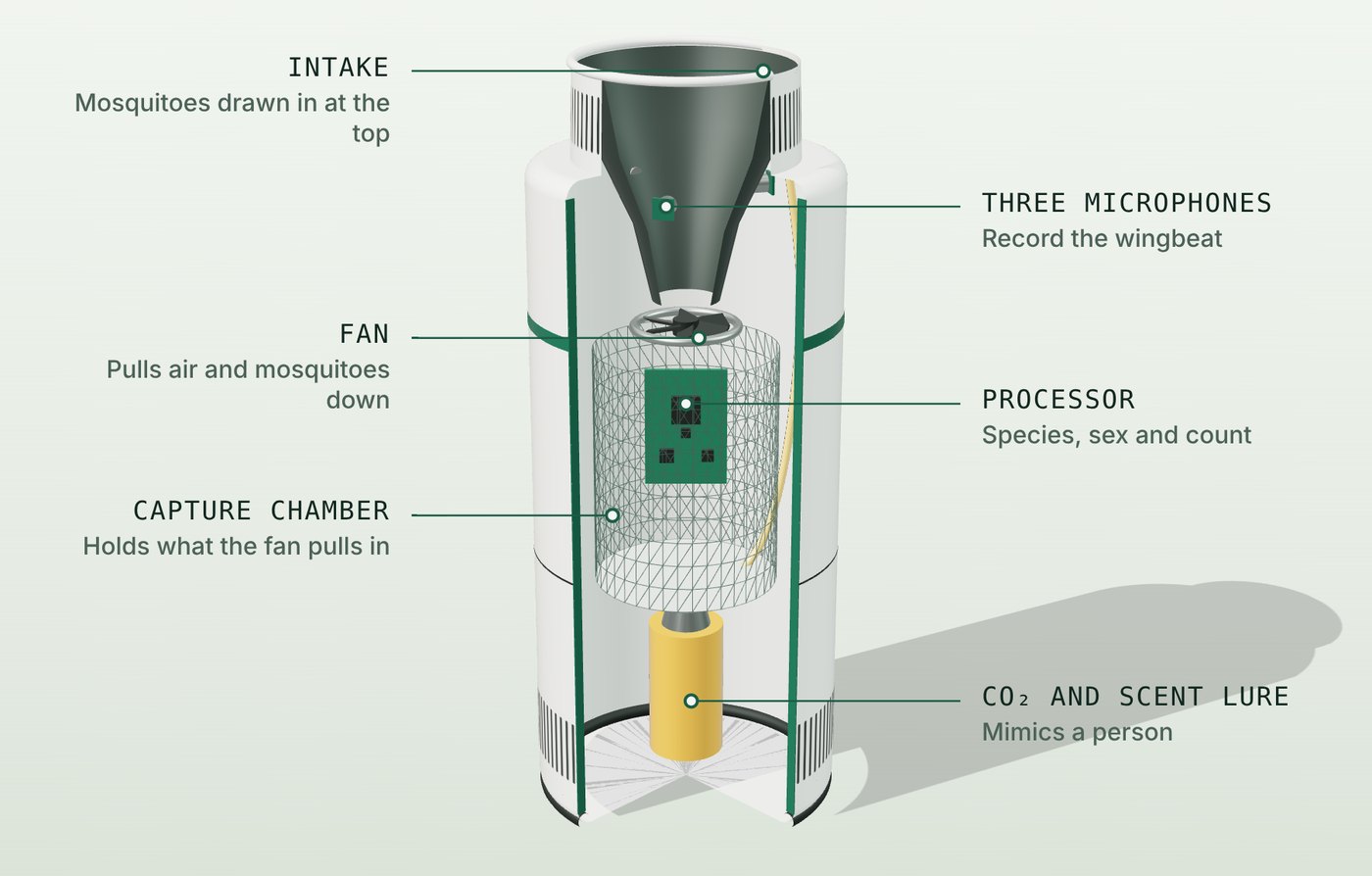
  1. Lure

    The device releases carbon dioxide and a human-like scent, the two signals a mosquito follows to find a person.

  2. Capture

    When mosquitoes come close, a fan starts and draws them inside.

  3. Listen

    Three microphones record the sound of their wings.

  4. Identify

    Software reads the wingbeat to tell the species and the sex. Only female mosquitoes bite, so that count matters most.

  5. Warn

    Readings build a map of where mosquitoes are thickest and which diseases they may carry, so residents and local authorities can act before cases rise.

Project
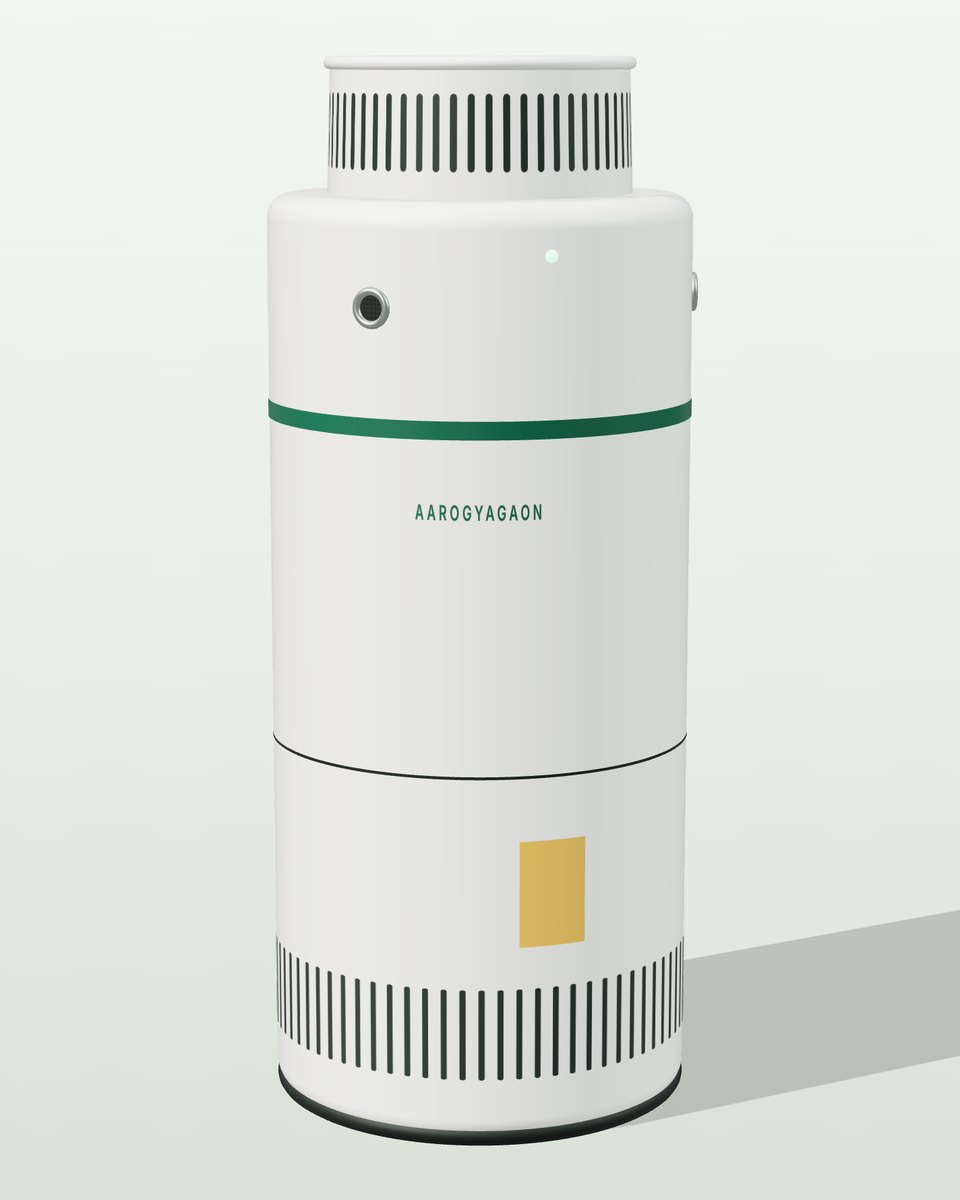
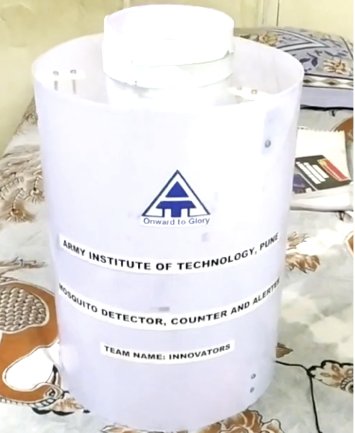
Mosquito Detector, Counter and Alerter
Prototype
A cylinder about 3 feet tall
Sensing
Three microphones
Reports
Species, sex and count
Variant
A unit that plugs into a streetlight, shown in 2018

In the villages

Active in 8 of 13 villages near Pune.

The device is actively deployed in 8 of 13 villages near Pune. It gives residents and local authorities advance warning, and shows where fogging and spraying will do the most good.

Residents told us what the early versions got wrong. Their feedback shaped what the device reports and how its alerts go out.

When an offer came to commercialise the device, we declined it, because accepting would have meant closing the village programme. Aarogyagaon runs on a not-for-profit basis.

Scholarships

20

students from remote villages, still in school.

A serious illness can cost a family its savings and a child their place in school. Aarogyagaon runs a scholarship programme for 20 students from remote villages in India, each from a family affected by a health crisis.

Milestones

From a college prototype to a village programme.

  1. Research begins

    Work on the device starts at Army Institute of Technology, Pune.

  2. Second place, The Grand India IoT Innovation Challenge

    Run by Tata Communications with the Confederation of Indian Industry. The contest drew 757 applications from 27 colleges, and the runner-up prize was Rs 3 lakh.

  3. First prize, AICTE-ECI-ISTE Chhatra Vishwakarma Awards 2018

    Won in the category "Any other Rural Appropriate Technologies" and conferred by Vice President M. Venkaiah Naidu in New Delhi.

  4. Impact Prize, Special Mention

    3M-CII Young Innovators Challenge Award 2019.

  5. Aarogyagaon begins

    The work moves from the lab to villages near Pune.

  6. 8 of 13 villages active, and 20 scholars

    The device programme and the scholarship programme run side by side.

In the press

Coverage of the device and its awards.

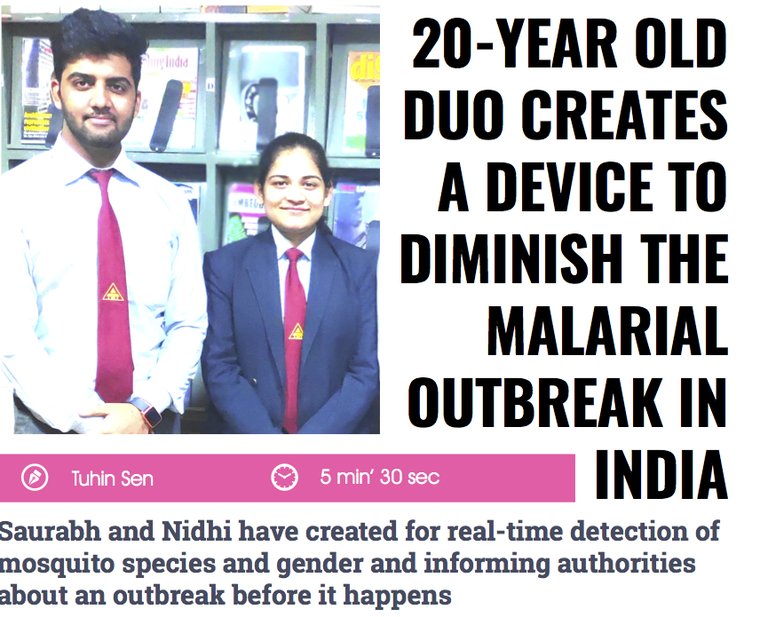
Newspaper clipping from The Optimist Citizen. Headline: 20-year old duo creates a device to diminish the malarial outbreak in India. The photo shows Saurabh and Nidhi.

The Optimist Citizen · 30 Sep 2019 · Print, page 3

20-year old duo creates a device to diminish the malarial outbreak in India

A profile by Tuhin Sen of the two students behind the device. It explains how the trap lures, captures and identifies mosquitoes, and the plan to place 50 to 100 units across a city.

Official records: the AICTE winners list and the Army Institute of Technology news page.

People

Who built it.

  • Saurabh SinghFounder of Aarogyagaon and co-creator of the device
  • Nidhi YadavCo-creator of the device
  • Dr G R PatilMentor to the team, and head of Electronics and Telecommunication at Army Institute of Technology when the device won its award